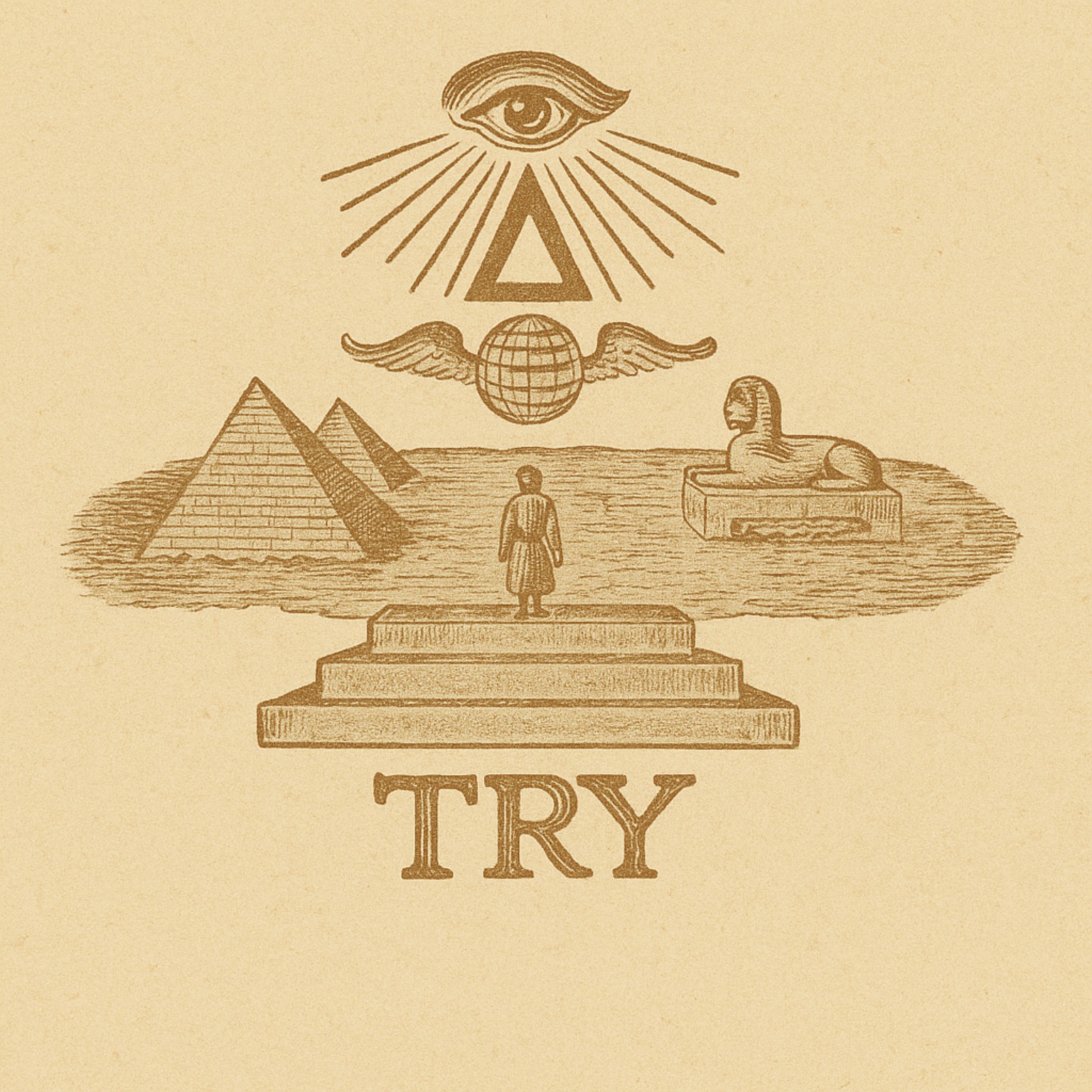
Egypt as a Witness, Not a Master
Long before the days of the Church there were nations that groped after God in symbols and rites. Egypt was one of these. Its priests and sages read the heavens, meditated upon life and death, and sought, in their own dim way, to express the truth that man must pass from darkness to light, from bondage to a higher order under divine judgment.
We do not turn to Egypt for a religion; we already have the Gospel of Christ. Yet it may strengthen faith to see that even among a people far from the Cross, there were shadows and hints of that same law of moral account and inner renewal which is brought to perfection only in the Lord Jesus.
Death and Rising Again
In the old story, Osiris is betrayed and slain, his body scattered, and his rule seemingly broken. Then comes the patient search, the gathering together, and the restoration of life and order. However veiled and imperfect this legend may be, it bears witness to a truth which God has written upon the heart of humanity: that selfishness and injustice cannot reign for ever, and that life, in the end, must triumph over the forces of destruction.
For the Christian, the true fulfillment of this hope is not found in any pagan myth, but in the death and resurrection of the Lord Jesus Christ. What the nations dimly prefigured in stories of dying and rising gods is made clear and sure in the empty tomb and the living Presence of the Nazarene.
Lessons for the Christian Seeker
When we look back upon the rites of ancient Egypt, we do so as Christians, judging all things by the light of the Gospel. We see a people aware that the soul must pass through trial, that there is a law higher than the whims of men, and that the heart must one day give account before a righteous standard. In this we recognize a partial and preparatory testimony to that fuller revelation given in Scripture concerning sin, repentance, and grace.
The true initiation for the disciple of Christ is not in hidden chambers or secret pageants, but in the daily cross—obedience to conscience, victory over appetite, and steadfast prayer to the Father in the Name of the Son. Whatever is sound in the old symbols serves us only as a reminder that God has never left Himself without a witness, even among those who knew not the Gospel.
Why We Preserve These Studies
These notes are not offered to revive a dead worship, nor to blend Christianity with foreign altars. They are kept as a matter of history and instruction, to show that the human heart in all ages has been haunted by the same great questions: What is the soul? What is righteousness? What lies beyond the grave?
He who ponders these things in a sober spirit will not be led away from Christ, but toward Him. He will see in the better elements of the Egyptian witness a faint outline of that great truth which shines clearly in the Gospel: that man must die to the lower life and be raised into a new obedience, not by his own ceremonies, but by the grace of God in Jesus Christ our Lord.